Publications

We are committed to increasing the understanding of employee ownership and its benefits

Filter By
Filter by

February 2026

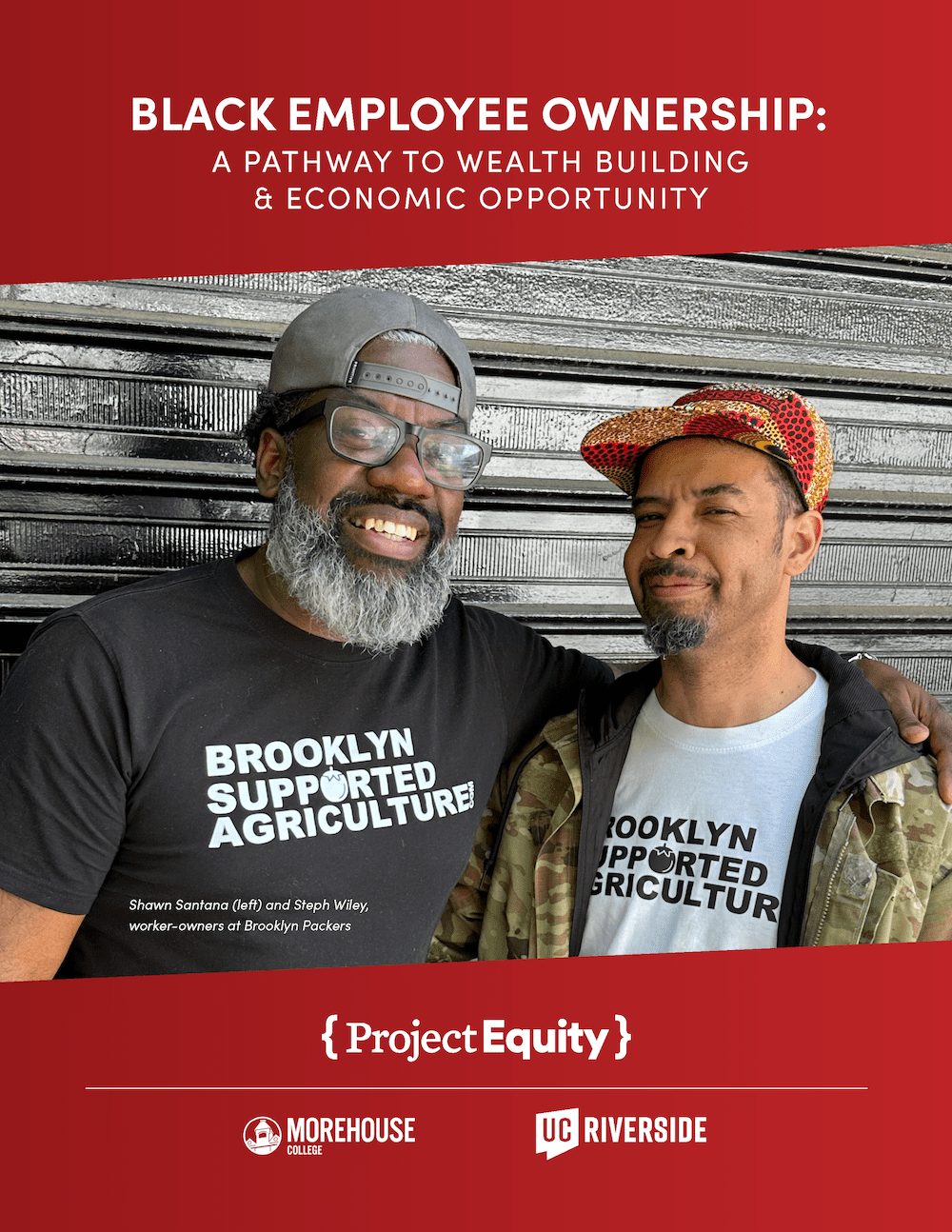
Black Employee Ownership: A Pathway to Wealth Building and Economic Opportunity is the culmination of a multi-year research project exploring the potential of employee ownership (EO) to advance economic prosperity in Black communities and help close the racial wealth gap.

Developed through a unique partnership with scholars at Morehouse College and the University of California, Riverside, the report examines how historical inequities, structural barriers, and contemporary policy environments shape access to EO for Black workers and entrepreneurs.

Through longitudinal data analysis, interviews and surveys of Black workers and entrepreneurs, a comprehensive policy audit, and case studies of Black-led employee-owned businesses, the report illuminates both the promise of EO as a tool for shared prosperity and the barriers that limit Black participation in EO.

To ensure EO is viable pathway to economic mobility in Black communities, the report recommends a series of actionable policy solutions aimed at scaling EO into an economy-wide norm while ensuring Black communities can fully share in its benefits—from culturally relevant education and outreach, to robust incentives and wraparound supports that center racial equity, to investments in the leadership of Black-led EO support organizations and trusted intermediaries.

Together, these findings and recommendations offer a roadmap for policymakers, practitioners, and advocates seeking to build a more inclusive economy through EO.

Black Employee Ownership: A Pathway to Wealth Building and Economic Opportunity is the culmination of a multi-year research project exploring the potential of employee ownership (EO) to advance economic prosperity in Black communities and help close the racial wealth gap. Developed through a unique partnership with scholars at Morehouse College[...]

June 2024

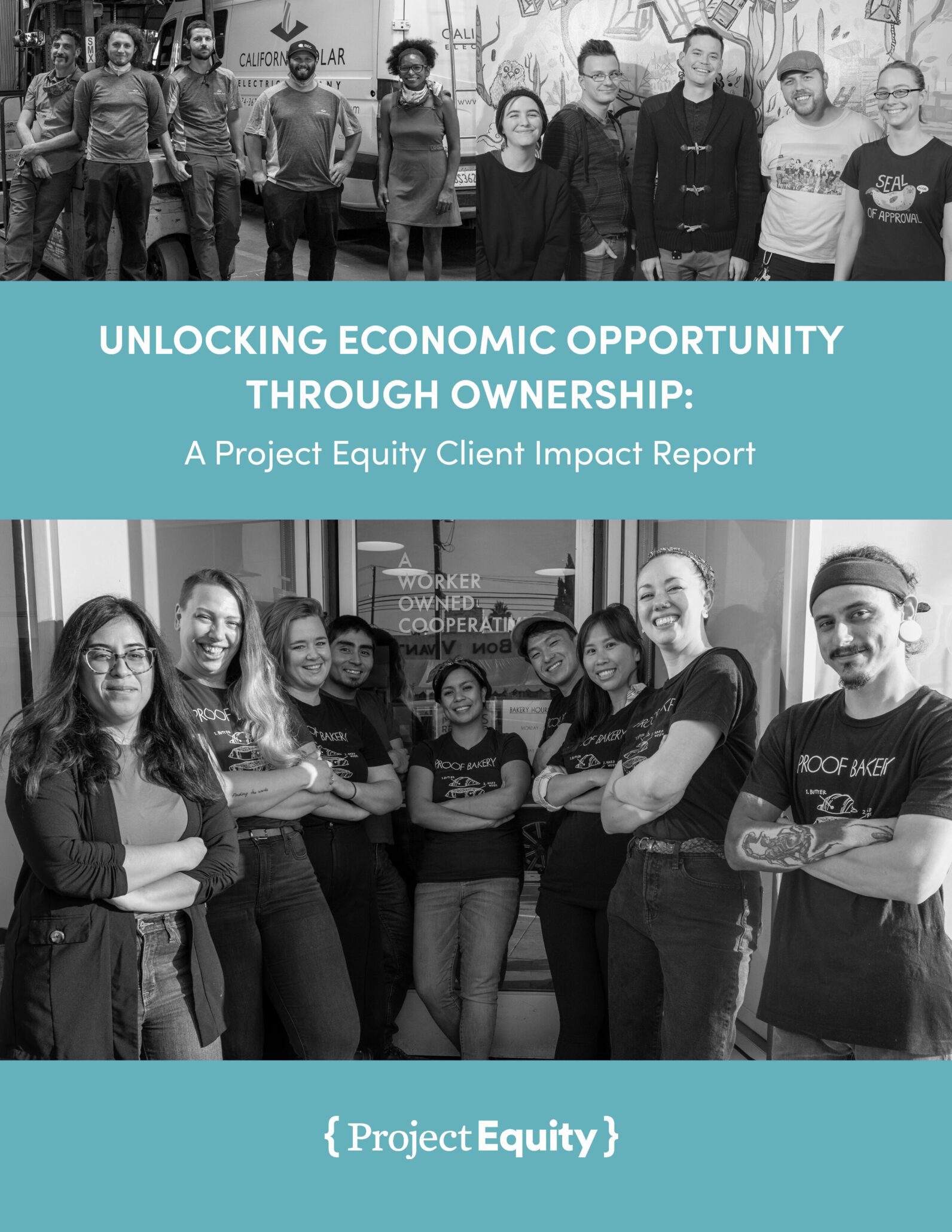
Unlocking Economic Opportunity Through Ownership

A Project Equity Client Impact Report

Discover how employee ownership (EO) is delivering real economic benefits for working people in Project Equity’s first Client Impact Report, “Unlocking Economic Opportunity Through Ownership.” In this report, we present key data from our Impact Measurement & Management (IMM) program, offering insights into the economic well-being of workers at 10 client businesses that Project Equity has helped transition to EO. Importantly, our findings highlight how employee-owned businesses can strategically combine distinct aspects of job quality—pay, profit sharing and benefits—to enhance workers’ financial security and overall well-being. While drawn from a limited sample of Project Equity’s clients, our data demonstrates how transitioning businesses to EO can be a catalyst for wealth creation and economic mobility.

Discover how employee ownership (EO) is delivering real economic benefits for working people in Project Equity’s first Client Impact Report, “Unlocking Economic Opportunity Through Ownership.” In this report, we present key data from our Impact Measurement & Management (IMM) program, offering insights into the economic well-being of workers at 10[...]

March 2024

Employee ownership trusts (EOTs) are an increasingly common way for sellers of closely held companies to transition out of ownership. In an EOT, the company sets up a special-purpose trust to own shares that the company (not employees) buys from the seller using their future profits to repay a note, often from the seller or a combination of the seller and a bank. The trust is designed to hold the shares in perpetuity. The employees are generally not owners but have a claim on company profits through dividends or conventional profit shares. EOTs are often chosen instead of an employee stock ownership plan (ESOP), which offers tax benefits but is much more costly and complex than an EOT. This book helps decision-makers decide whether an EOT is the right approach for their company. Chapter 1 introduces EOTs and compares them with ESOPs. Chapter 2 elaborates on how EOTs work, and chapter 3 delves into structuring them. Chapter 4 explores EOT financing, while chapter 5 discusses EOT governance. Chapter 6 discusses how EOTs can share equity rights with employees. Finally, chapter 7 provides EOT company case studies.


Authors: Anne-Claire Broughton, Courtney Kemp, Alison Lingane, Christopher Michael, Corey Rosen, Stacey Smith, and Steve Virgil


Purchase the full publication here.

Employee ownership trusts (EOTs) are an increasingly common way for sellers of closely held companies to transition out of ownership. In an EOT, the company sets up a special-purpose trust to own shares that the company (not employees) buys from the seller using their future profits to repay a note,[...]

Published August 2023

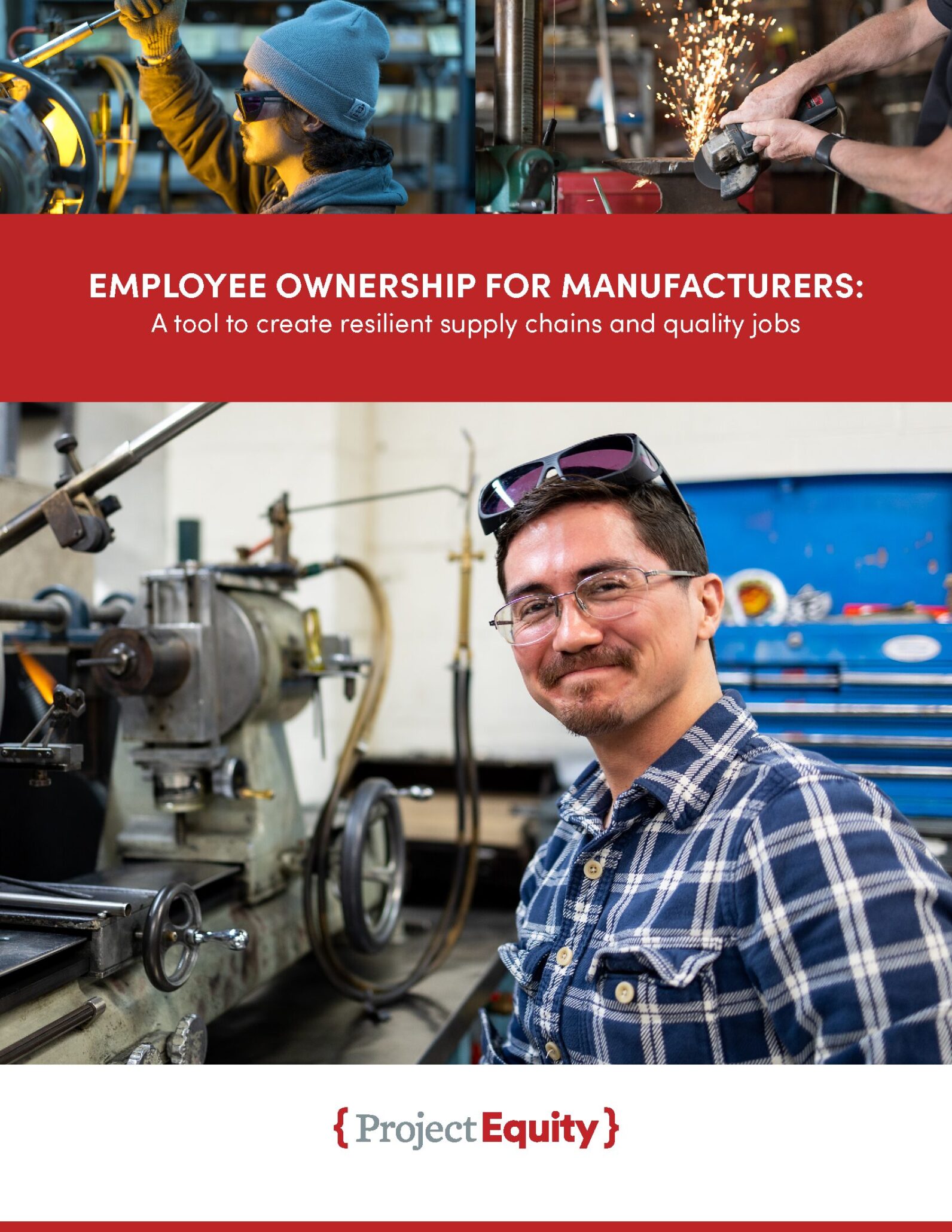
Employee Ownership for Manufacturers

A tool to create resilient supply chains and quality jobs

Though it has long been a backbone of quality jobs and a strong economy, American manufacturing faces a set of mounting challenges. In the wake of the pandemic, supply chains are more fragile than ever and the workforce shortage continues to grow. What is less well documented is that both of these existing challenges could be made much worse by a looming wave of retiring owners who have no clear succession plan: 60% of small- and medium-sized manufacturers have owners at or near retirement age, threatening the future of almost 150,000 businesses and, with them, 3 million jobs. To ensure a future in which American manufacturers can thrive, we must address the risk posed by this “Silver Tsunami” of retiring owners.

This report presents employee ownership as a strategy to address all three challenges with a flexible and proactive succession planning tool. We highlight the growing number of cases in which employee ownership has been successfully used to strengthen small- and medium-sized American manufacturers, including an innovative partnership the Oregon Manufacturing Extension Partnership (OMEP) has formed with Project Equity to offer their clients employee ownership succession planning services. By connecting these pressing challenges with this powerful solution, this report aims to equip key stakeholders to incorporate employee ownership into their toolkits to support small- and medium-sized manufacturers across the country, taking a critical step toward building quality jobs, forming resilient supply chains, and establishing sustainable business models.

Though it has long been a backbone of quality jobs and a strong economy, American manufacturing faces a set of mounting challenges. In the wake of the pandemic, supply chains are more fragile than ever and the workforce shortage continues to grow. What is less well documented is that both[...]

Published June 2023

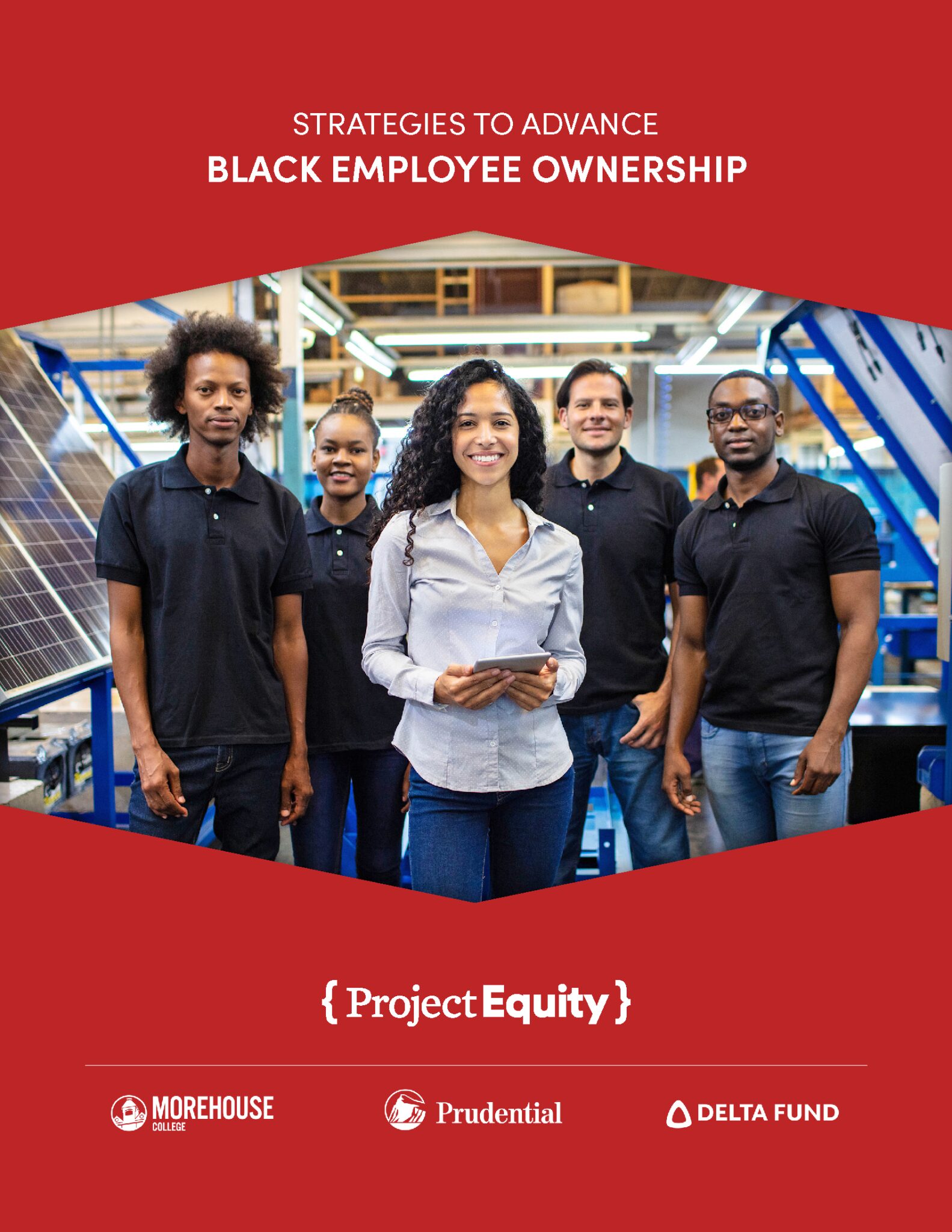
Broad-based employee ownership sustains quality jobs and builds wealth for employees. It creates stronger and more profitable businesses and preserves the legacy and wealth of small businesses in communities. Project Equity’s publication, Strategies to Advance Black Employee Ownership Employee Ownership offers strategies and practical considerations to advance Black employee ownership as a complement to the Morehouse College paper, Employee Ownership for Black Workers: Closing the Racial Wealth Gap. The paper suggests those strategies should focus on these goals:

  1. Preserving Black wealth for Black business owners through EO transitions
  2. Creating Black wealth by transitioning companies with significant Black workforces (regardless of ownership demographics) to employee ownership
  3. Helping Black-owned micro businesses grow so those that want to consider EO will be ready
  4. Investing in long-term, high-touch development approaches for startup cooperatives

Broad-based employee ownership sustains quality jobs and builds wealth for employees. It creates stronger and more profitable businesses and preserves the legacy and wealth of small businesses in communities. Project Equity’s publication, Strategies to Advance Black Employee Ownership Employee Ownership offers strategies and practical considerations to advance Black employee ownership[...]

Search
Search